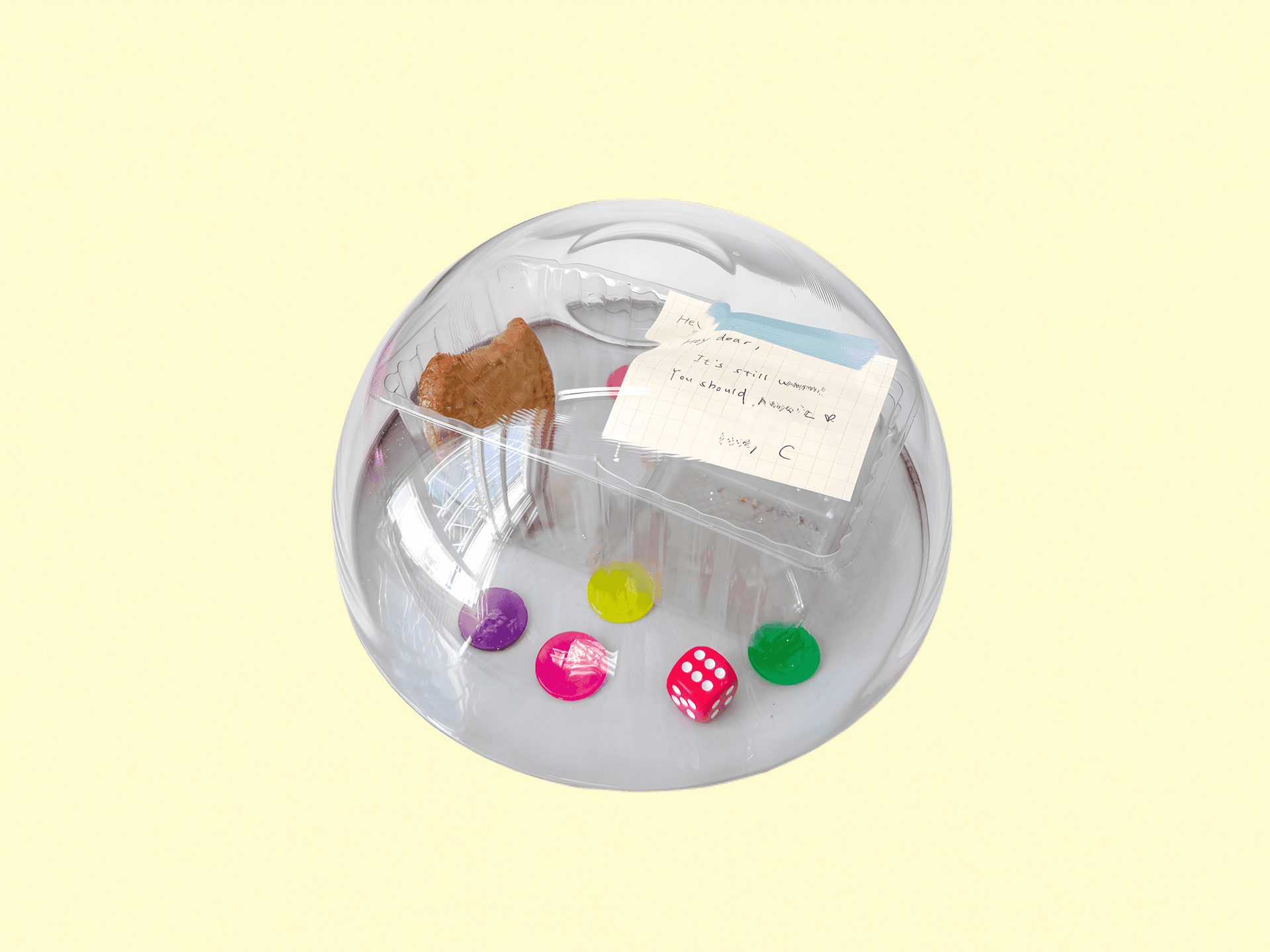
The Last Biscuit
Clementine Hei-man Cheung
She, from whom she inherited half a face (they say she has her father’s eyes and contours, her mother’s grin), once told her younger self, “Your father is someone who would offer the last biscuit to others instead of eating it himself. He would rather starve to death.” She grew up watching her parents sacrifice. They sacrificed their time, assets, values, and interests, solely for the sake of others, especially to complete her, to make her whole. Against this, it therefore resulted in shaping her root belief in love.
Long before she entered the education and field of mathematics, she had experienced and been taught by their examples of this “impeccable” equation, this truthful principle they lived and demonstrated to her—sacrificing yourself equates to love and the act of giving love; prioritising others before yourself.
She was always overjoyed by how much she could offer to others until she was overdrafted, overwhelmed, exhausted, and fatigued. She felt the sweetness of sacrificing until she no longer did. Not in vain did she exhaust her strength catapulting the boomerang. Reckless at the start, now its spin is ceaseless. She bears the waxing and waning, the profit and loss. Like the moon, like finance, like her city. She doesn’t bet or gamble, except with the emotions she devotes to places and individuals. All in, to sink or swim.
She has finally arrived at the land of self-love and appreciation. It took her much longer than ever expected, but she eventually reached here, better late than never. Self-love isn’t equal to selfishness, but rather the opposite, to be known of her own capacity and how much to reserve for herself, before offering the last biscuit to others. As if she was taking a flight, passengers should secure their own oxygen masks before assisting others. One cannot offer help effectively if they are in the same dire straits as those they’re trying to help.